Bi' Kedi Gördüm Sanki: a façade full of children's cats
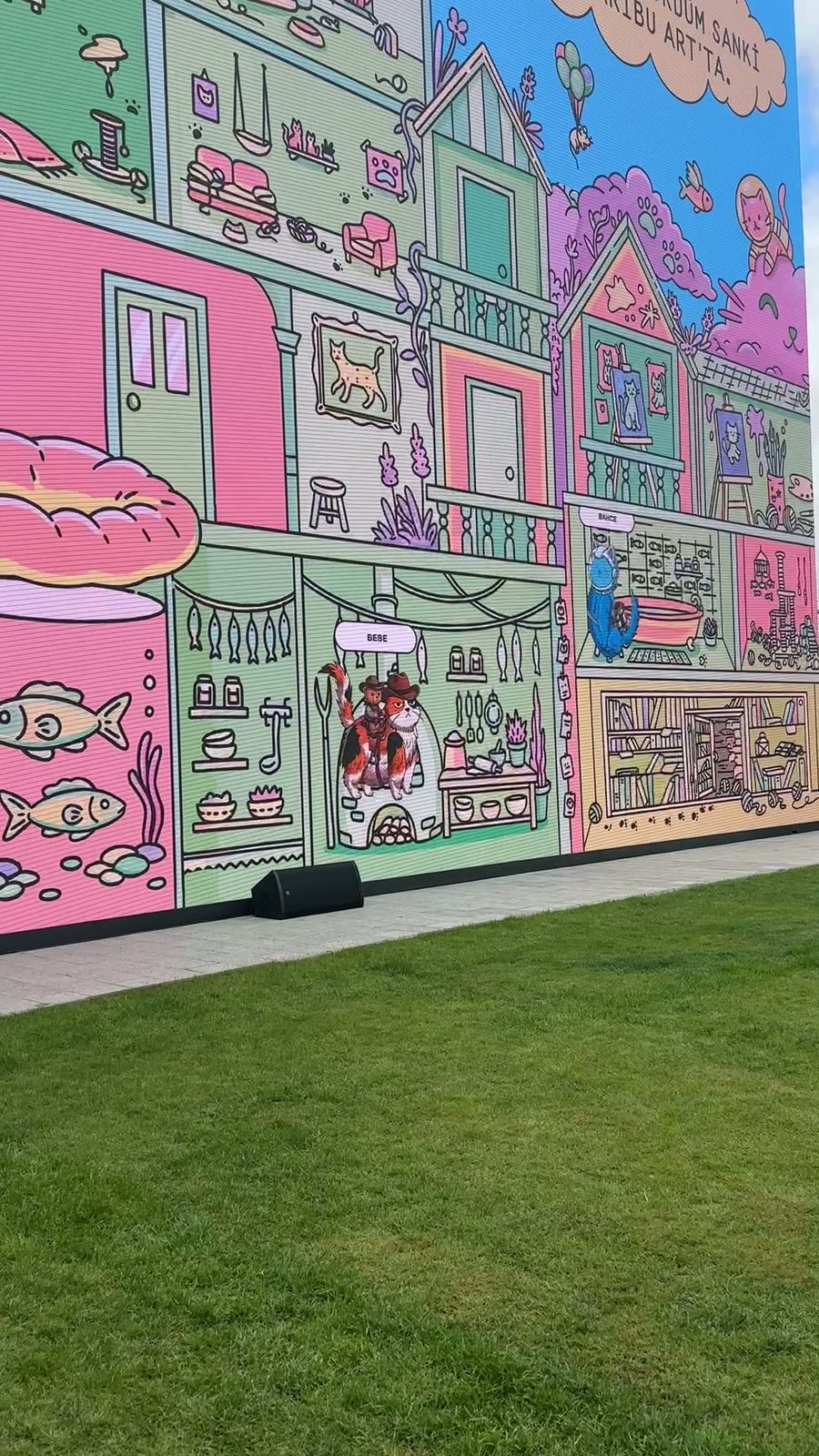
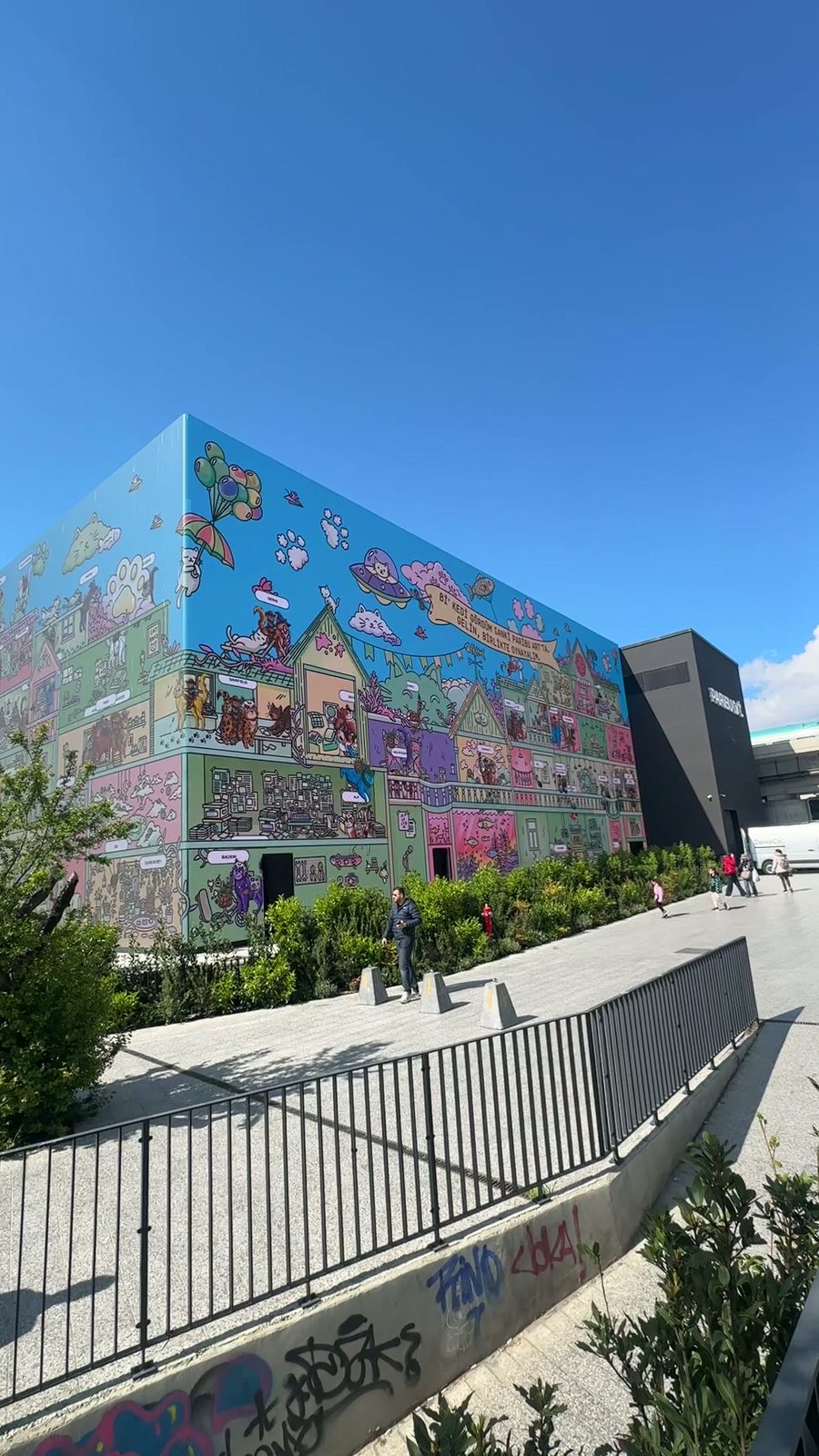
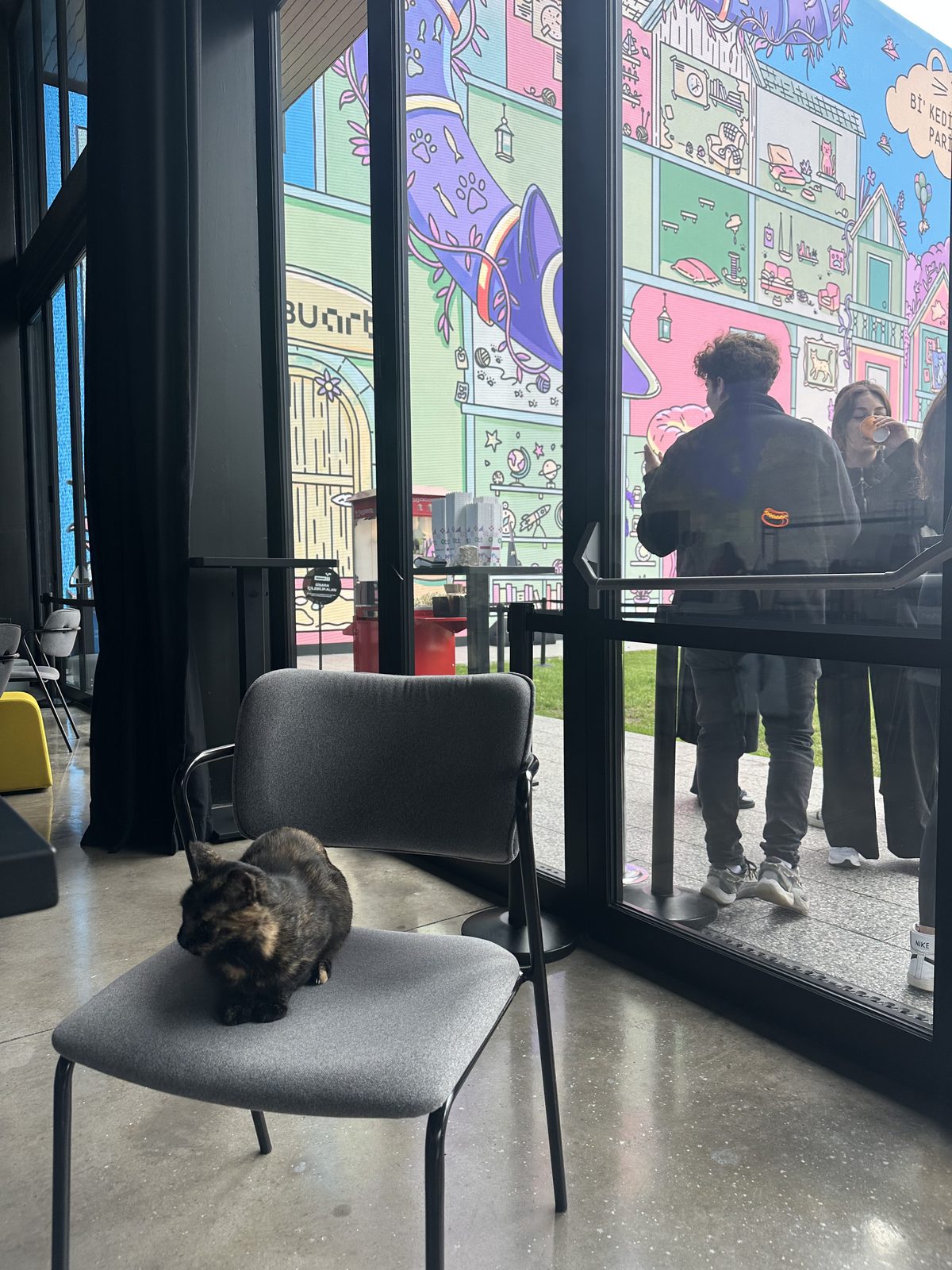
23 April 2026On 23 April 2026, National Sovereignty and Children's Day, the façade of Paribu Art in Kadıköy filled up with cats. A child had drawn each one a few seconds earlier.
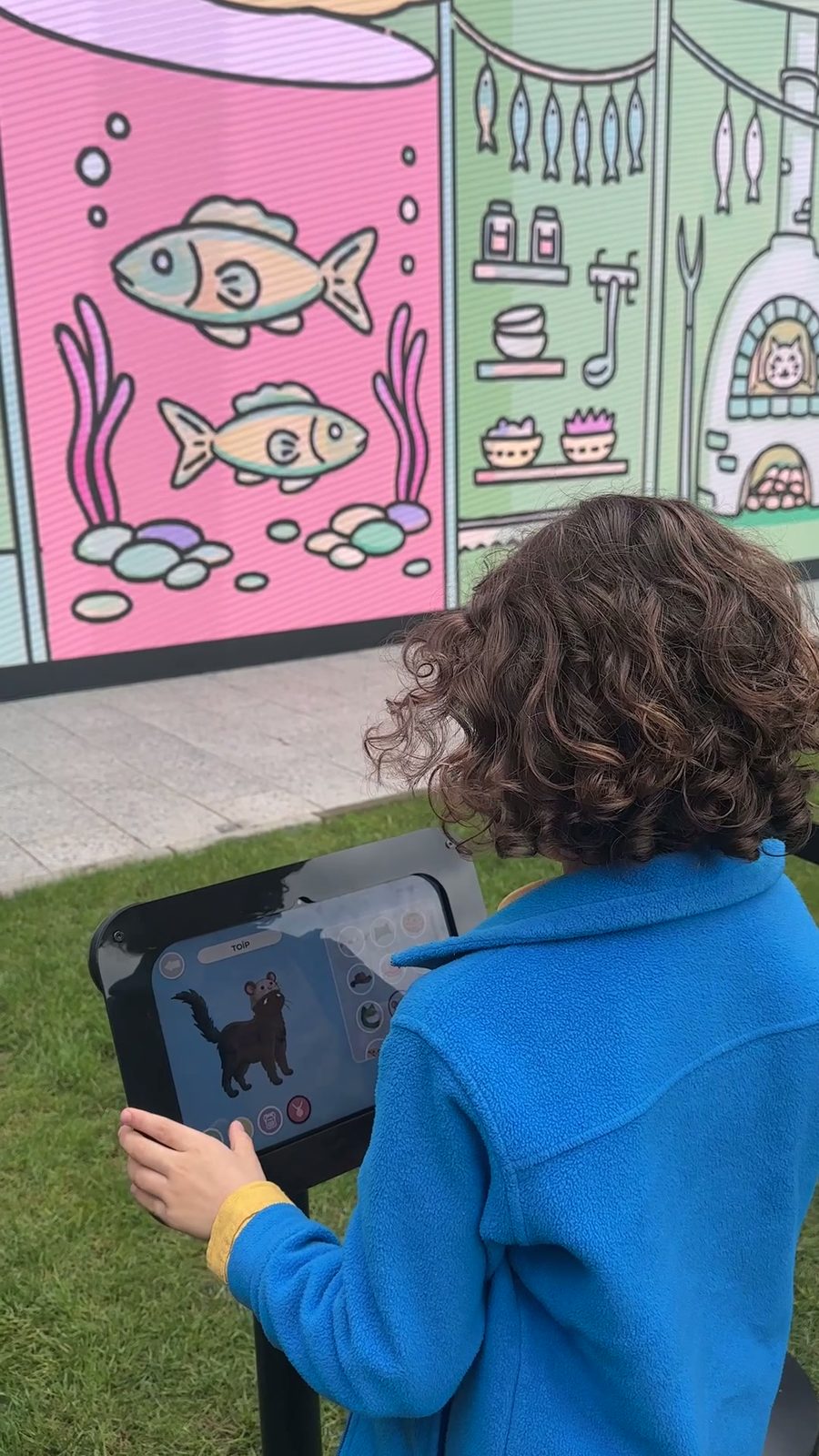
We called the day Bi' Kedi Gördüm Sanki (“I think I saw a cat”). In the garden in front of the building, children sat down with tablets and coloured ready-made cat templates with their own colours and patterns. Each cat became that child's own avatar.
From a tablet to a building
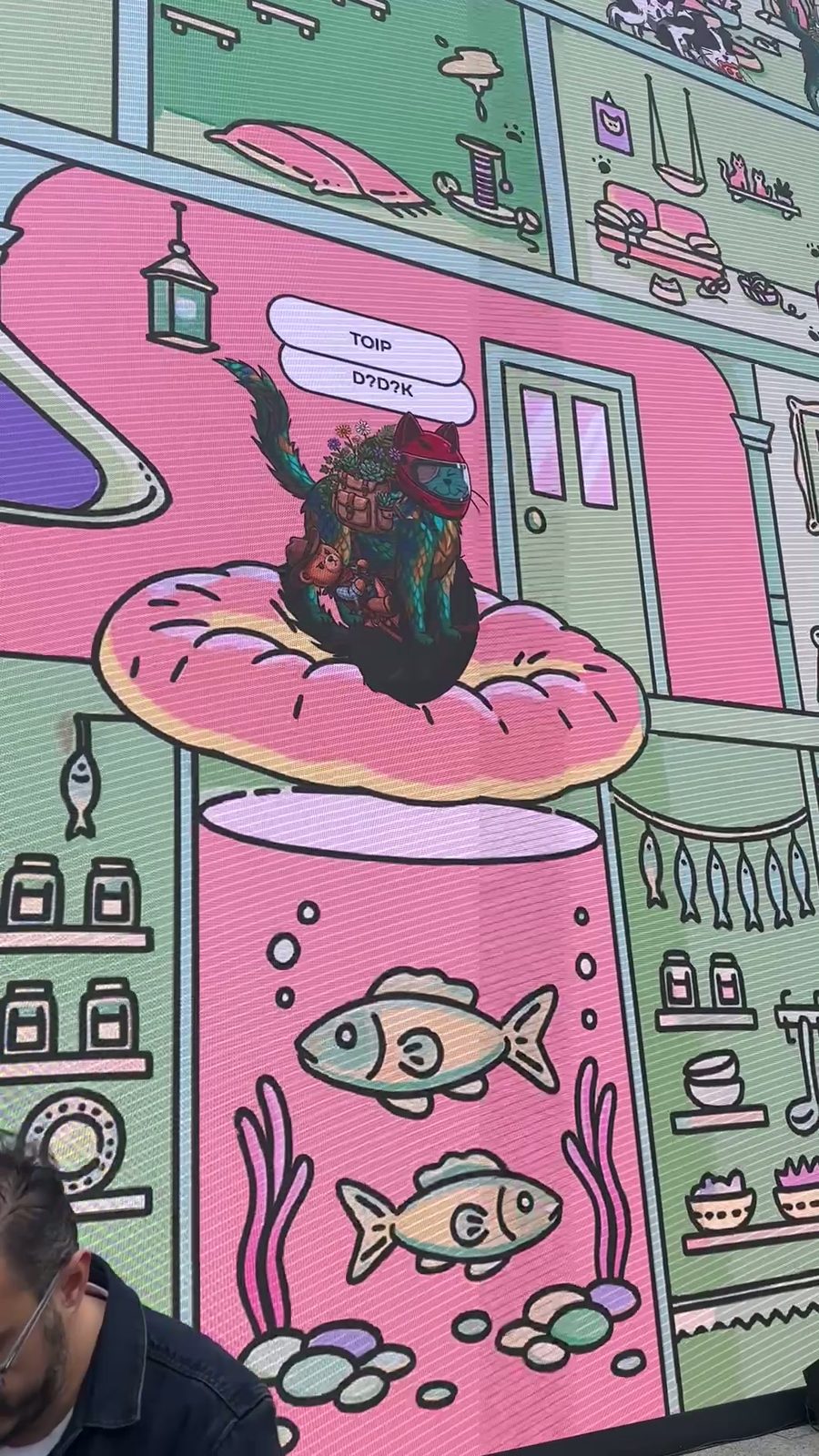
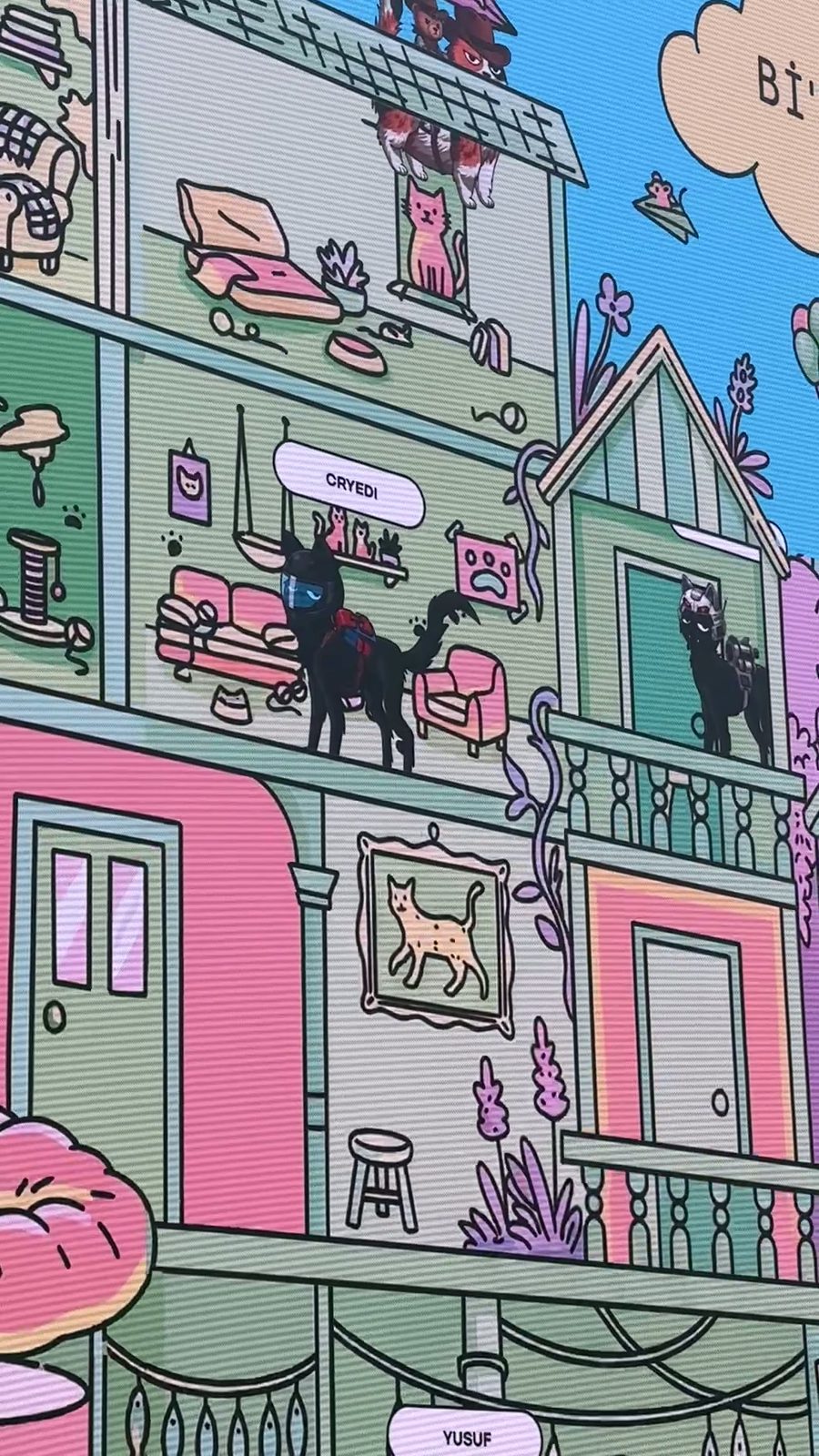
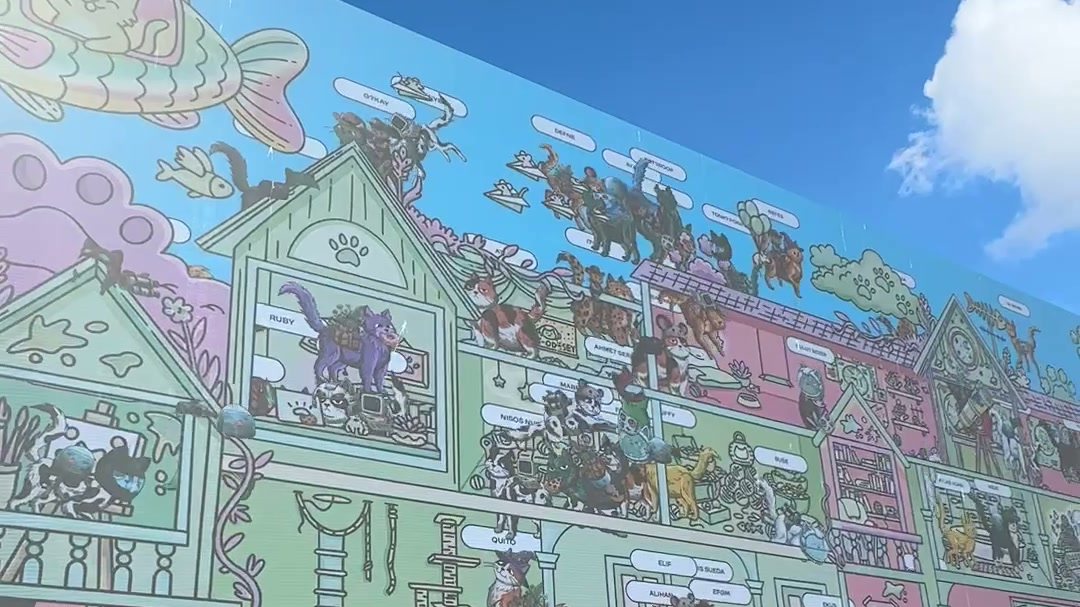
The moment a child finished, their cat popped up on the outer LED screens and came to life in short animations: peeking out of windows, stretching on a giant simit, drifting past a fish tank in a pink shop window.
For the day we drew the façade as a cheerful, many-windowed house with shops, balconies, plants, bakeries and aquariums: plenty of corners for a cat to settle into.
Why a cat?
In Kadıköy cats are neighbours. They sleep in shop windows, own the benches and walk in and out of buildings as they please. We chose the cat for the district's street culture, so that children could bring a little of the street onto the building.
I liked the change of role most. On a holiday like this, children watch something prepared for them. This time the whole street watched what the children made.
Under the hood
At 32,320 × 4,320 pixels, the Disguise-powered façade at Paribu Art in Terminal Kadıköy is the world’s highest-resolution fixed outdoor LED screen, with about 140 million pixels across 1,250 m². For Bi’ Kedi Gördüm Sanki we built the tablet-to-façade pipeline and synchronised the RenderStream cluster.
In a Unity app we built for five Android tablets, children personalised, named and dressed cats. Each swipe sent a few hundred bytes of JSON over OSC to an intermediary transmitter, which relayed the cat to the Disguise RX render nodes. Up to 200 cats shared the façade at once.
The cats used Unity’s 2D rigging and animation system. A shader rendered and layered sprites on a shared base rig in real time, allowing hundreds of distinct designs from a single rig.
The canvas exceeded the capacity of a single Disguise RenderStream workload, so eight RX render nodes ran the Unity scene in parallel, each rendering one slice. Cats could cross the entire façade, so the nodes had to agree on every cat’s position at every frame. In early tests, a cat crossing a seam appeared in two places at once.
We used the Disguise Designer session’s timeline as the sole clock, delivered to every node through RenderStream frame data. Each node waited for its first frame before advancing. The OSC transmitter assigned each cat one start time on that shared clock and broadcast it to all eight nodes. Each node calculated position directly from shared time, sampled animation clips at the same absolute phase, and derived every random choice from the cat’s ID. We handled timeline loops and scrubs so the clock never ran backwards. The eight nodes rendered as one continuous canvas.
To prevent spawn-time stutter, we moved roughly a million spline evaluations per path to scene load, precomputing where 90 animation anchors fell along paths with over 100 spline segments.
With our reusable synchronisation layer, children could play in real time, and for free, on one of the largest outdoor RenderStream canvases at full resolution.
The Paribu Studio team developed the tablet interface and the façade animations. Habertürk, Ekonomim, All and Pretty Mother covered the day.