Façade Stories: a building that dresses like its neighbours
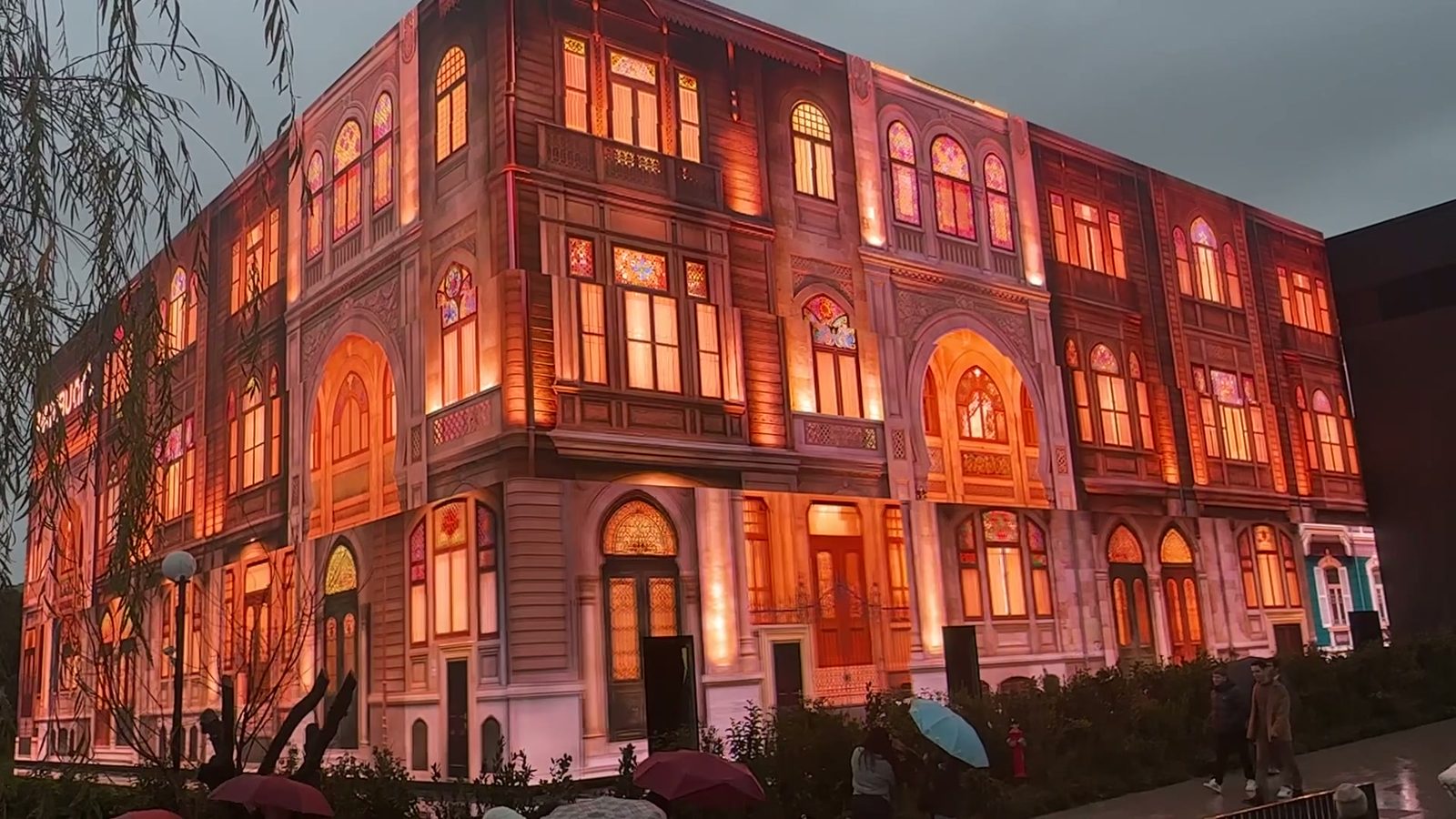
December 2025Paribu Art introduced itself in an outfit unique to Kadıköy. Façade Stories (Cephe Hikâyeleri) is the work we made for its outer screens: a building trying to belong to the neighbourhood it was born into.
As a digital being that takes its seed from the place and tries to put down roots in the soil it was born in, Paribu Art strives to become an expression unique to Kadıköy. Like a living organism, it looks around, learns and synthesises. Then it weaves itself a façade that resembles the old buildings around it, changes its clothes, blends in and settles into an unhurried place in the street. From its windows it throws mysterious glances outward, and keeps learning by the light of knowledge, writing its own story.
An archive of Kadıköy
The first version rests on Z-Image-Turbo, an image model we customised with photographs of 72 historic places in Kadıköy. We gathered them district by district. Around Bahariye and the market: the Süreyya Opera (1927) and Vedat Tek's old market hall that is now the Haldun Taner Stage. In Moda: the neoclassical Sarıca Apartment (1903), Barış Manço's Victorian house, Vedat Tek's Moda pier, Saint Joseph and the Levantine köşks. Yeldeğirmeni, with its Art Nouveau apartments such as Valpreda and Sünget, is almost a museum of old buildings in itself. Then the Hasanpaşa Gasworks, Haydarpaşa Station, and the old mansions of Kalamış, Göztepe and Erenköy. All of them are registered historic buildings.
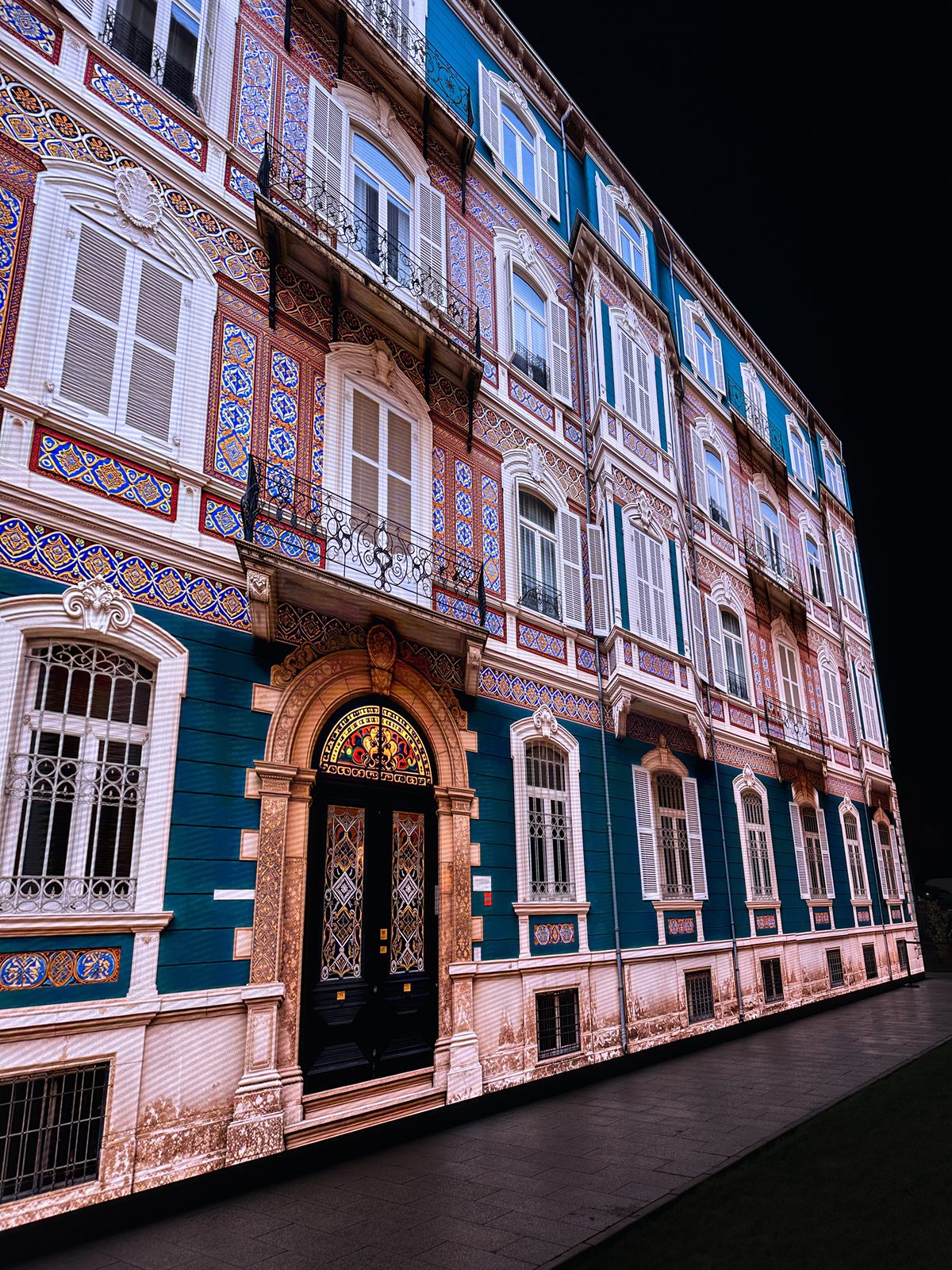
The model learns the architectural language of these photographs (cornices, bay windows, balconies, arches, the rhythm of windows on a stone front) and improvises new façades that look like them but never existed. They feel familiar to anyone who knows Kadıköy, yet they belong to an imaginary city.
Small stories in the windows
On top of these façades we added small animations that evoke life, knowledge, art, culture and city life: a window lighting up, a curtain moving, something happening behind a door. Each façade becomes a character with a story of its own, and Paribu Art comes alive, telling its guests tiny stories in the middle of everyday life.
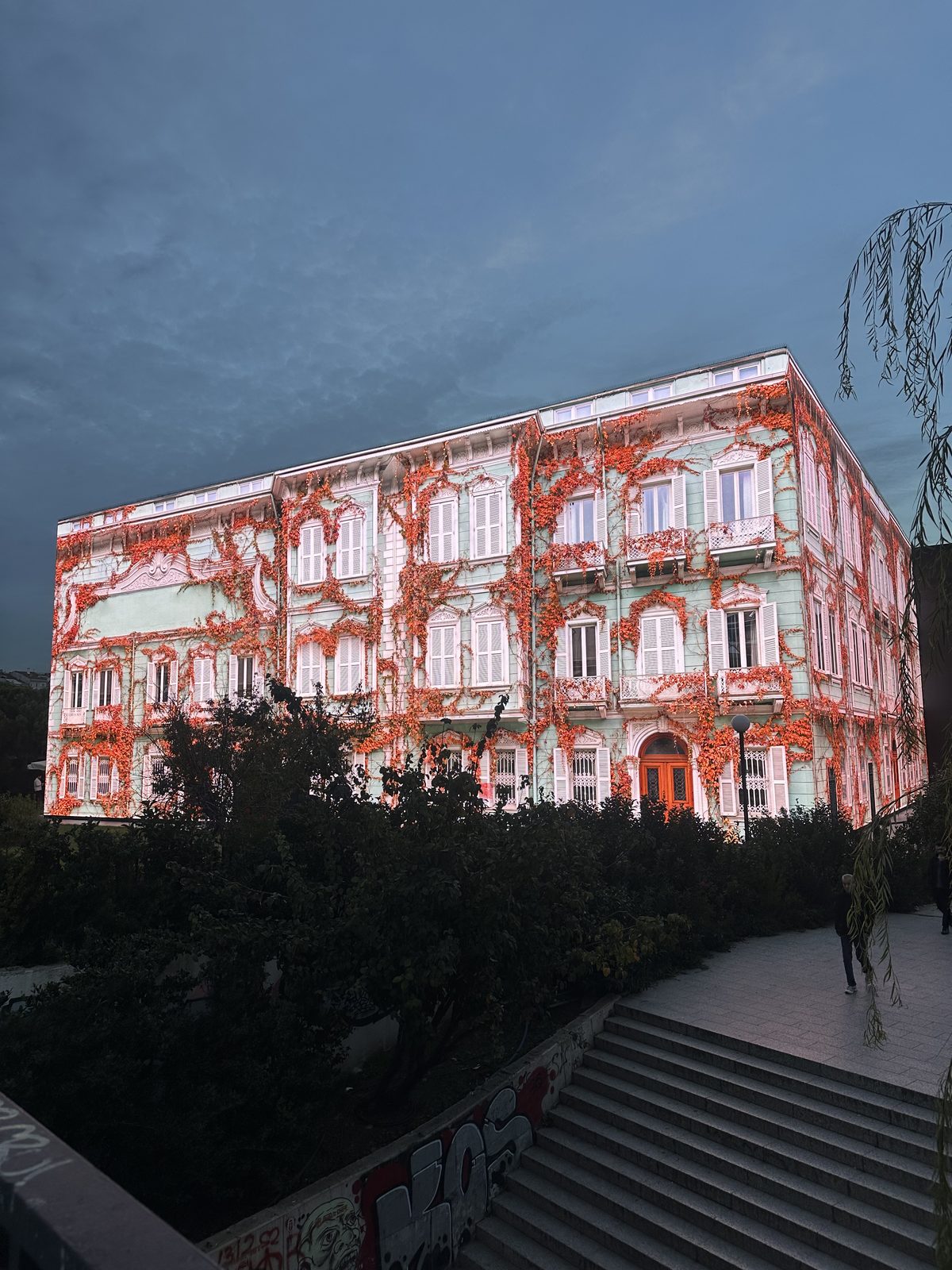
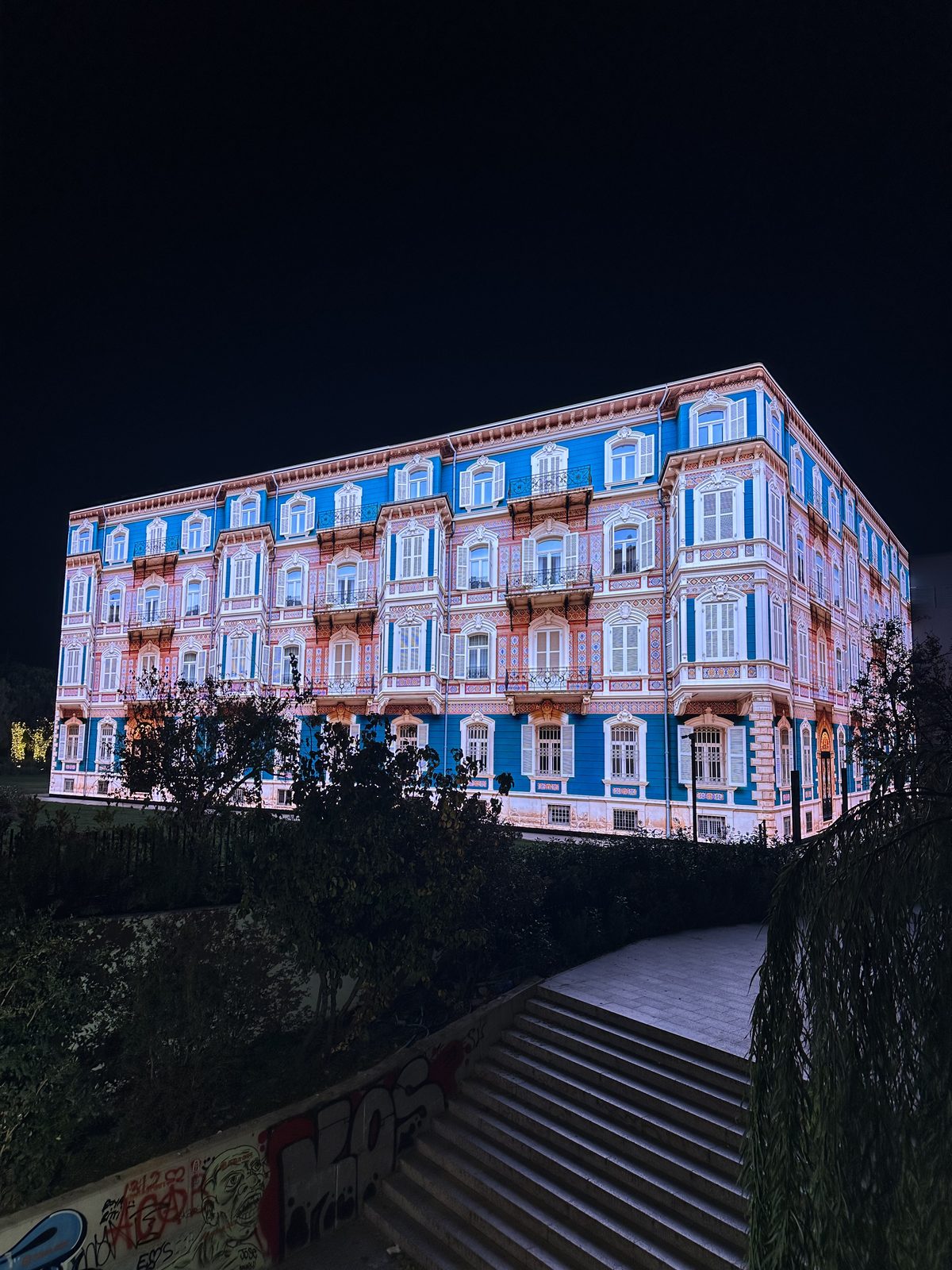
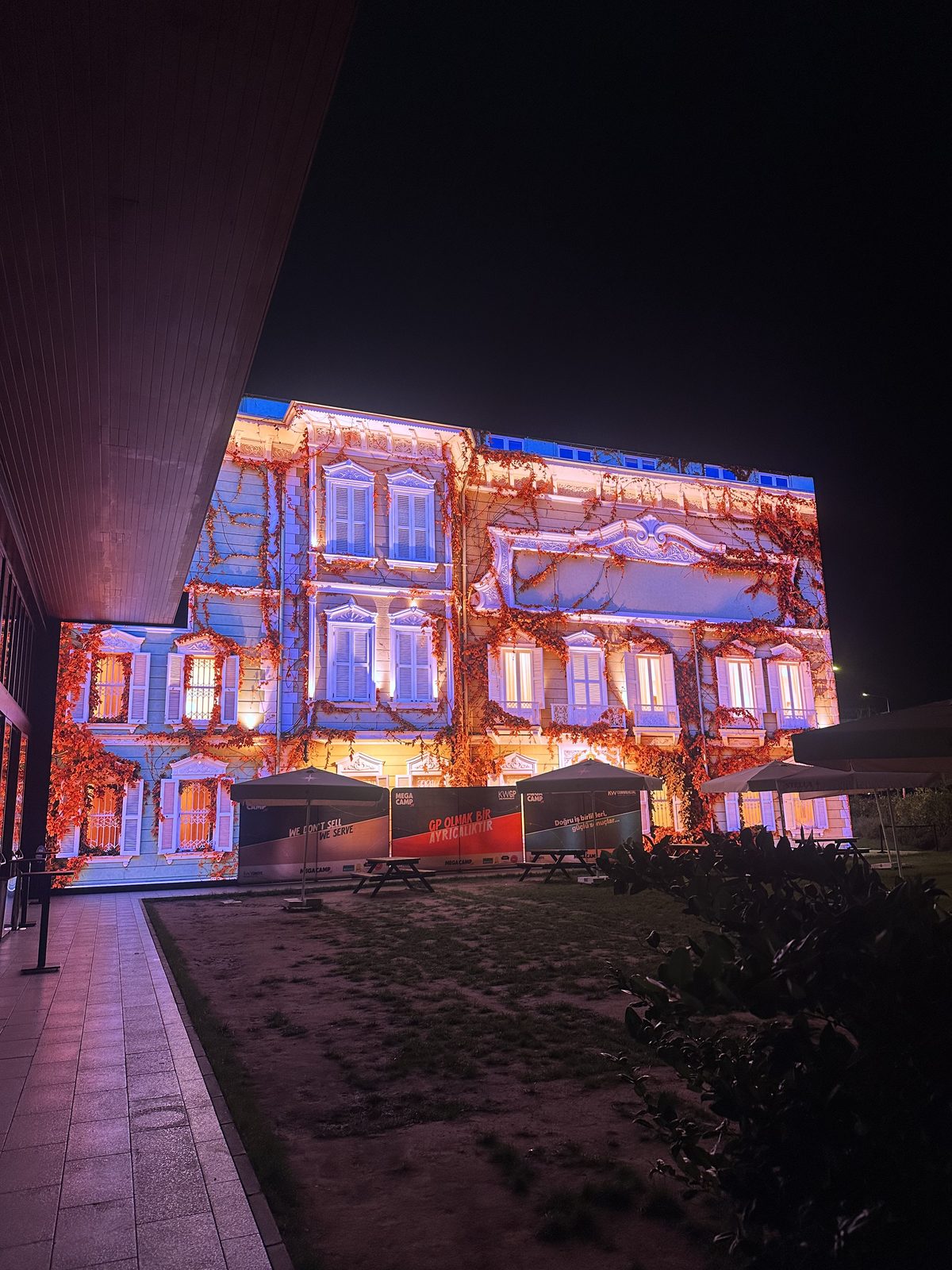
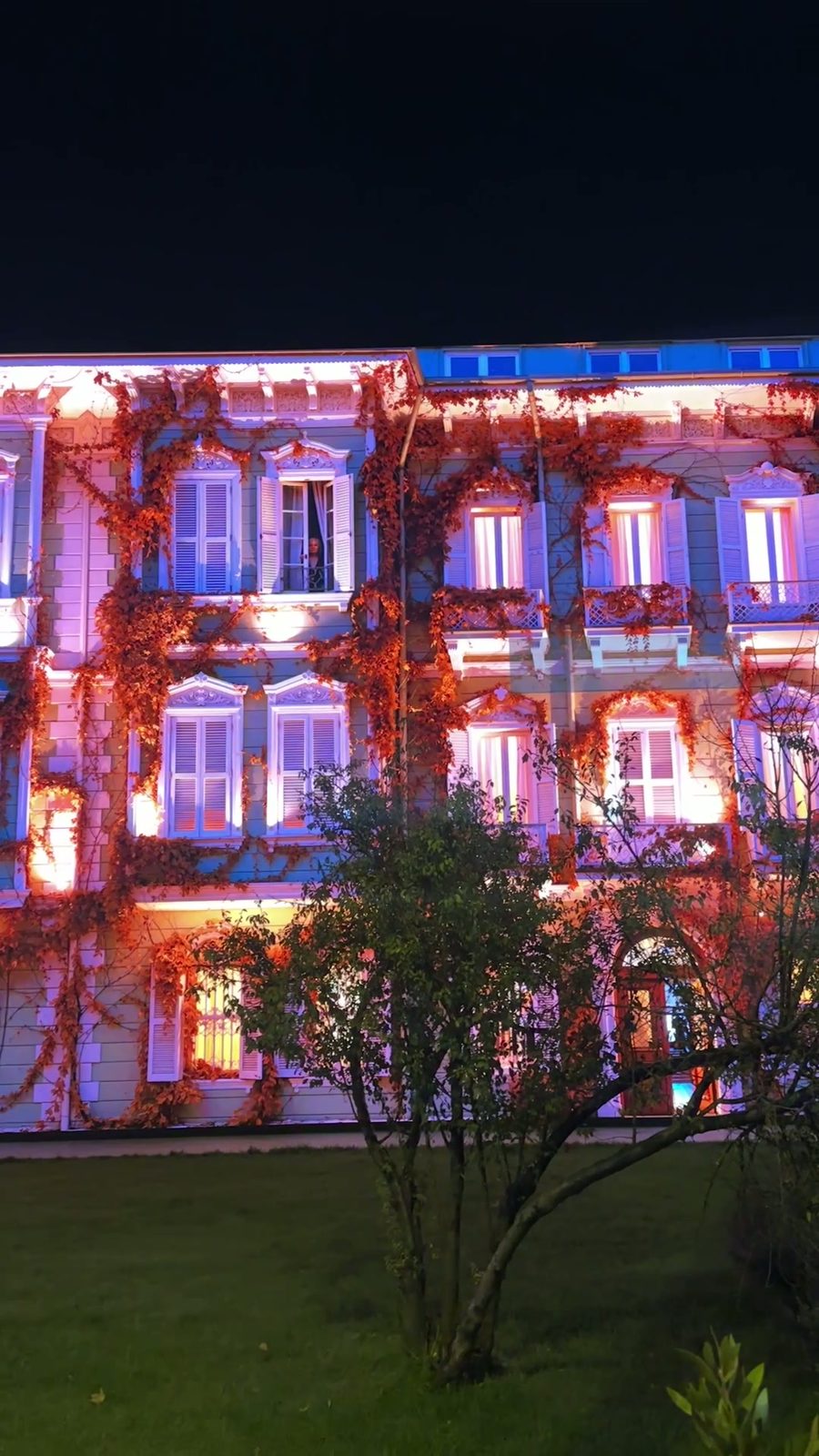
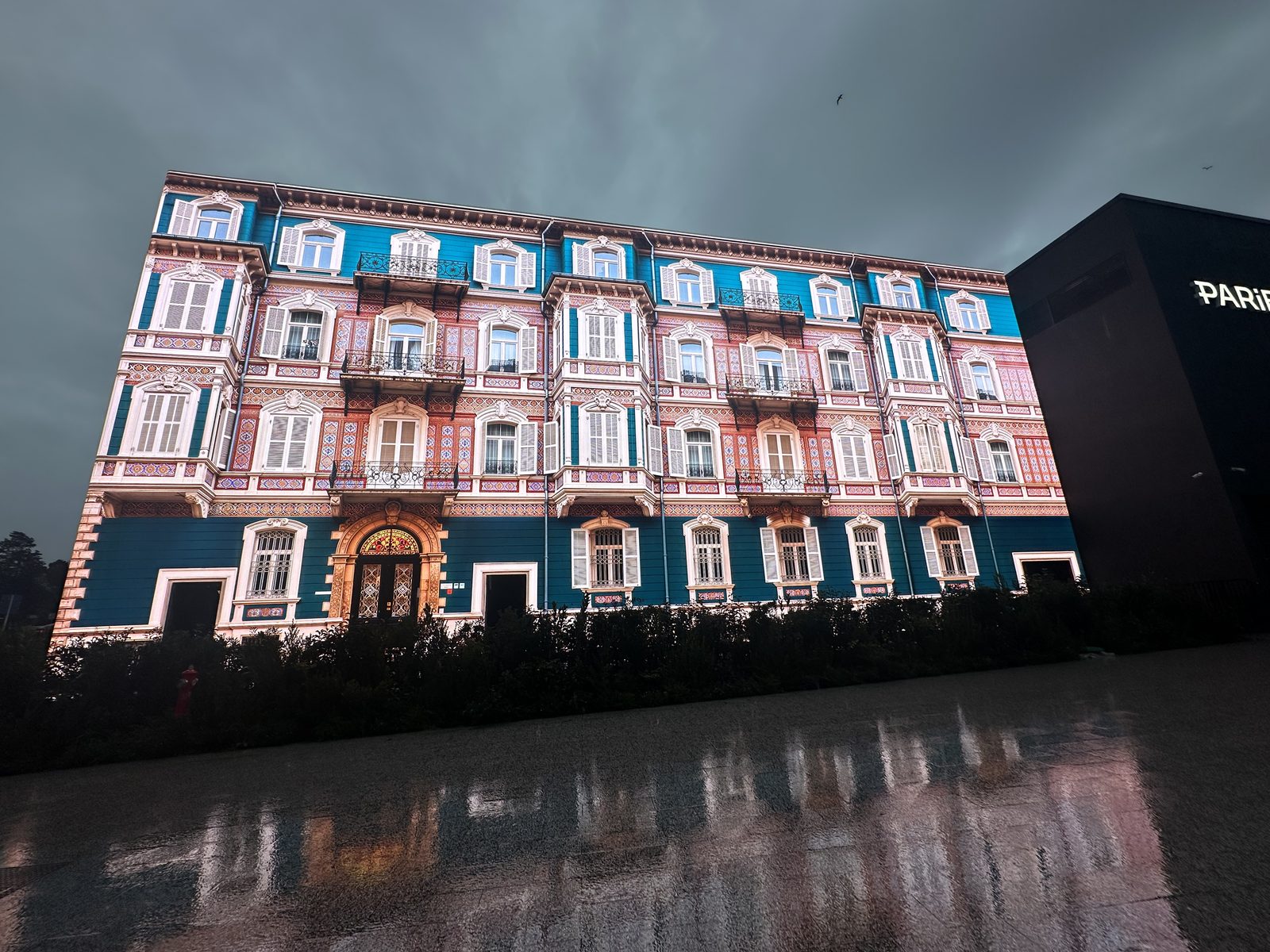
Each façade is a different costume. At dusk the building is pink and turquoise, wrapped in carved stone; in another season it is overgrown with red ivy; late at night it turns blue and white. It is as if Paribu Art, newly born in Kadıköy, looked at the buildings around it and asked: how do I belong here?
Under the hood: the new season
For the new season of Façade Stories we rebuilt the pipeline so that it runs locally, on the render machines we have installed at Paribu Art.
For the second version we trained a new model on the Kadıköy photographs we had collected, better and at a higher resolution, this time on FLUX.2 [klein] 9B instead of Z-Image-Turbo, as a LoKr. Like a LoRA, a LoKr teaches the model something new by adding a small set of weights instead of retraining it, but it builds them as the Kronecker product of two small matrices, so a small file can carry more detail. We trained it in Ostris AI Toolkit: every photograph carries the same short caption (a trigger word, then “historic Kadikoy mansion facade, late Ottoman Istanbul residential architecture”), and the training ran at 512, 768 and 1,024 pixels. With the trained model, producing a new façade is now fast.
Generation runs as a single ComfyUI workflow. The model improvises a façade; the workflow takes a depth map of the building's first façade, made with Depth Anything 3, and fits the new image onto it, so that the image follows the structure of that façade; then it enhances the result and, from the same image, creates a night version with the windows lit. It all happens in one run.
The colours come from a list as well: the prompt picks a palette (ivory with sage-green details, dusty rose with cream, muted teal with ivory, burgundy with warm stone) and a kind of ceramic tilework, from cobalt-blue glaze to multicoloured Ottoman tiles.
A second workflow dresses the same façade for the seasons (winter, spring, an autumn with dry ivy on the walls) while the building underneath stays the same.
The newest addition is the sun. A node in the workflow takes Paribu Art's coordinates in Kadıköy (40.99° N, 29.03° E), a date and an hour, works out where the sun stands at that moment and renders a lit sphere as a lighting reference. The façade is then relit to match, so it appears in the light of that hour.
We have also integrated Oriel, our video-generation tool running on MiniMax, into the pipeline, so the façades it produces can be turned into video.
The text on the screen
“As a digital entity rooted in its local origins, the Paribu Art building strives to become a unique expression of Kadıköy. Like a living organism, it observes, learns, and synthesizes. Trained on images of the district's historic buildings, an AI model helps it weave a façade that blends into its surroundings. From its windows, it will continue to look outward with mystery, learning through the light of knowledge and exploring art, culture, and city life as it writes its own story.”